What Is the Best Thermal Sticker Roll Supplier in China?
Choosing the best Thermal Sticker Roll supplier in China requires more than comparing prices. A low quotation may hide weak adhesive, uneven coating, or inconsistent roll winding. The right supplier should demonstrate stable production, clear quality controls, and practical experience with your application.
This guide examines how Chinese manufacturers handle thermal paper selection, adhesive performance, core sizes, roll dimensions, and surface protection. Reliable suppliers should provide samples before large orders. They should also explain storage conditions, shelf life, packaging methods, and production tolerances in clear English. Ask for test data, not only attractive product photographs. A roll may look smooth but still print poorly on a real label printer.
Supplier verification matters. Review factory experience, export records, inspection procedures, and communication habits. Confirm whether the company produces the rolls directly or mainly resells them. Certifications can support credibility, but they should match the actual product and market requirements. Independent inspection may be worthwhile for large shipments.
There is no universal best supplier. It depends on order volume, printer compatibility, label size, adhesive needs, and delivery expectations. Even experienced buyers can overlook humidity during storage or slight core variations. That deserves reflection. A careful comparison should balance cost, consistency, responsiveness, and after-sales support. The strongest supplier is not always the cheapest one. It is the partner that can repeat the same quality when your next shipment arrives.
What Is a Thermal Sticker Roll Supplier?
A thermal sticker roll supplier produces, converts, and delivers self-adhesive labels wound around paper cores. These labels react to heat from a printer, creating text or barcodes without traditional ink. A supplier may coat the thermal paper, apply adhesive, slit jumbo rolls, and package finished rolls for shipment. That sounds simple. It is not.
In practice, buyers should discuss label width, roll diameter, core size, adhesive strength, and printing speed. Samples should be tested on the actual printer. Check barcode clarity, surface smoothness, edge curling, and resistance to moisture or rubbing. A capable Chinese supplier should provide material specifications, production records, and batch inspection results. Clear communication matters when changing sizes or adhesive types.
The best supplier is not always the cheapest. Low pricing can hide thin paper, weak adhesive, or inconsistent winding. One practical weakness is that sample performance may not match every production batch. Ask for pre-shipment photos and random roll checks. An experienced supplier can also suggest packaging that prevents crushed edges during transport. I would still verify every claim. Reliable cooperation grows from documented quality, realistic lead times, and honest answers when a problem appears.
What Is the Best Thermal Sticker Roll Supplier in China?
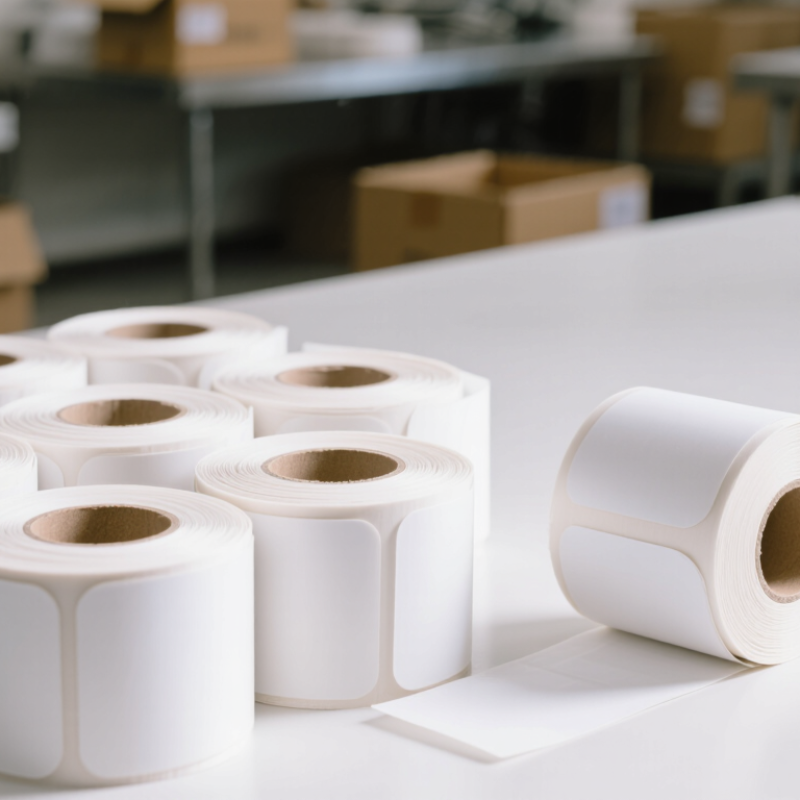
Common thermal sticker roll formats used for shipping, retail, POS, weighing, and barcode applications
A thermal sticker roll supplier typically provides pressure-sensitive labels coated with heat-reactive material, usually for direct thermal printing. When comparing suppliers, buyers should check roll dimensions, adhesive performance, print clarity, material consistency, and compatibility with the intended printer and application.
What Quality and Compliance Standards Should You Check?
Choosing the best thermal sticker roll supplier in China requires more than comparing prices. Quality and compliance should be verified through records, testing, and production controls.
GS1 reports that barcodes are scanned over five billion times daily worldwide. A weak thermal coating can create faded bars, unreadable labels, and costly reprints. Request test data for print density, barcode grade, basis weight, caliper, adhesive peel, and aging resistance. Test the coating. Print samples at your actual speed and temperature, then store them under heat, humidity, and light. A supplier may pass one sample test but still show variation between batches.
Check whether the factory operates a documented quality system aligned with ISO 9001. ISO’s annual certification survey records more than one million ISO 9001 certificates globally, but certification alone proves limited control. Review calibration records, incoming-material inspection, batch traceability, and corrective-action reports. For regulated applications, ask for material declarations covering REACH and RoHS requirements. Food or pharmaceutical labels may need applicable food-contact or migration documentation. Keep records.
Paper sourcing also matters. Where sustainability claims are important, verify chain-of-custody evidence rather than accepting a printed claim. Some certificates may cover the paper mill, not the converting factory. That distinction is easy to miss. Ask for recent third-party test reports, production samples, and a written specification with tolerances. My practical concern is simple: a perfect laboratory report cannot replace consistent rolls arriving at your warehouse.
How to Choose the Right Supplier for Your Business?
What Is the Best Thermal Sticker Roll Supplier in China?
How to Choose the Right Supplier for Your Business?
The best supplier is not always the one offering the lowest roll price. A practical evaluation should begin with your printer, application, and storage conditions. Direct thermal rolls suit shipping labels and short-term receipts. Thermal transfer rolls usually provide stronger resistance to heat, moisture, and abrasion.
Smithers’ 2024 report, The Future of Labels and Packaging to 2028, forecasts global label demand will exceed 78 billion square metres by 2028. This growth increases supplier choices, but also increases quality risks. Ask for coating specifications, paper GSM, core size, outer diameter, winding direction, and roll-length tolerance. A reliable factory should provide batch records and a certificate of analysis.
Test samples in real conditions. Print dense barcodes, expose labels to warehouse humidity, and check adhesive performance on cardboard, plastic, and glass. Confirm compatibility with your printer speed and printhead temperature. Request evidence of ISO 9001 procedures and applicable chemical compliance, including BPA and BPS declarations when required.
Unit price can mislead. Compare the cost per usable label, not per roll. One supplier may offer a cheaper roll with more jams or weaker adhesive. I would not trust a polished sample alone. Samples can hide inconsistent coating across production batches. Require a pilot order, inspection standards, and a written replacement process. That small step often reveals how the supplier handles mistakes.