China’s Ethernet Cable Labels manufacturing sector has grown beyond simple sticker production. Today, suppliers provide heat-shrink markers, wrap-around labels, flag labels, and custom cable identification systems. These products support data centers, telecom rooms, industrial networks, and structured cabling projects.
Small details matter.
A label must remain readable after installation, testing, bundling, and years of maintenance. Valerie Maguire, a recognized structured-cabling specialist, captures this principle clearly: “A label is useful only when it remains readable during maintenance.” Her observation reflects a practical truth. Attractive printing means little when adhesive fails inside a crowded cabinet.
This guide reviews ten prominent Chinese Ethernet Cable Labels manufacturers through practical purchasing criteria. These criteria include material quality, print resistance, adhesive performance, customization ability, production capacity, and export experience. Compliance documentation also matters, especially for buyers serving commercial and industrial projects. Clear product samples can reveal more than polished brochures. Check them under heat, moisture, abrasion, and low-light conditions.
No list is perfect.
Supplier rankings may change with factory upgrades, pricing, certifications, and customer service. Some manufacturers excel at high-volume orders, while others perform better with small batches or specialized designs. That difference is easy to miss. Therefore, this overview focuses on useful comparisons rather than exaggerated claims. It also encourages buyers to verify current certificates, test reports, lead times, and sample quality before selecting a partner. A reliable Ethernet Cable Labels supplier should make identification easier, not create another maintenance problem.
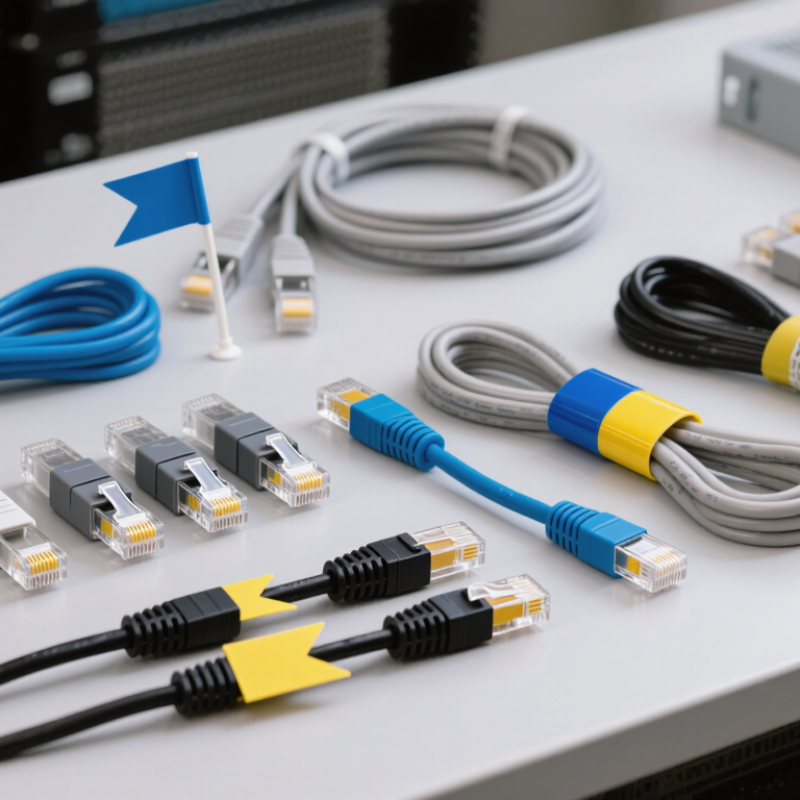
Ethernet cable labels are small identifiers attached to network cables, patch cords, or structured cabling. They may show cable category, length, port number, testing date, or installation location.
A clear label turns a confusing cable bundle into a readable map. In a server room, this saves time when tracing a blue cable across several racks. It also helps technicians match cables with drawings and test records.
Labels matter because network errors are not always caused by faulty equipment. A missing or inaccurate label can lead to unplugged devices, delayed maintenance, or incorrect cable replacement.
Professional installers usually use durable materials that resist heat, abrasion, moisture, and frequent handling. The label should remain readable under normal working conditions. However, printed information can still fade. This is an easy detail to underestimate.
Tips:
Use short, consistent codes. Include both ends of each cable. Record the same information in a wiring schedule. Test readability before large-scale installation. Leave enough space for future changes, because networks rarely stay unchanged.
When comparing Ethernet cable label manufacturers, review material quality, adhesive strength, print clarity, customization options, and production consistency. Ask for samples and test them on actual cable jackets. A label that looks perfect indoors may fail in a warm, dusty cabinet. That practical check often reveals more than a product brochure.
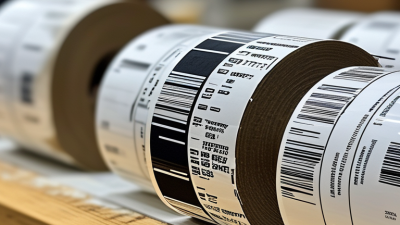
China’s Ethernet cable label industry is structured around several specialized supplier groups. Some manufacturers produce blank thermal labels and polyester tags. Others focus on custom printing, laser marking, or cable identification sleeves. A smaller group combines materials, printing, cutting, and packaging under one roof.
This structure supports flexible orders. Buyers can request short runs for network cabinets or larger batches for data centers. In supplier evaluations, material quality matters greatly. Labels must resist heat, abrasion, moisture, and repeated handling. Adhesive performance also deserves attention. A label that curls after installation creates avoidable maintenance work. Manufacturing capability is only one part of the picture. Quality records, sample testing, production consistency, and clear communication reveal more. A factory may offer impressive equipment but still struggle with color control or delivery accuracy. That is an imperfect reality worth checking early.
Tips: Ask for samples on real Ethernet cables. Test bending, rubbing, and removal after several days. Confirm printing accuracy, adhesive type, packaging, and inspection procedures. Request production photos or audit documents when appropriate. Do not rely on a catalog alone. Small details often separate a dependable supplier from an average one.
Ranking the top ten Chinese Ethernet cable manufacturers requires evidence, not attractive catalogs.
The first criterion is manufacturing experience. Companies with stable production records, skilled technicians, and documented quality changes deserve stronger consideration. Factory audits should examine conductor drawing, insulation control, twisting lines, shielding, and final packaging. A clean floor alone proves little.
Technical performance carries the greatest weight. Test samples should meet applicable ANSI/TIA and ISO/IEC requirements for category, bandwidth, insertion loss, return loss, and crosstalk. Inspectors should verify conductor gauge, copper composition, jacket thickness, and flame performance. Batch traceability is essential. Each carton should connect to production records and test results. Independent laboratory reports are more reliable than internal claims, although they still require careful review. Tiny details matter.
A practical ranking should also measure delivery consistency, customization, and after-sales support. Reviewers can compare sample approval times, minimum order quantities, labeling accuracy, and responses to nonconformities. Export experience matters when documentation, packaging, and regional compliance differ. Price should receive limited weight because unusually low costs may hide thinner conductors or unstable materials. No scorecard is perfect. A supplier may pass laboratory tests yet struggle with a sudden volume increase. Another may offer excellent engineering but weak communication. Rechecking suppliers every year keeps the ranking grounded in current evidence.
China’s leading Ethernet cable label manufacturers differ by production focus and testing depth.
A coastal factory specializes in heat-shrink labels for server rooms, using thermal transfer printing and controlled adhesive curing.
Another focuses on wraparound cable markers, with precise die-cutting for narrow Cat6 and Cat6A cables. A third supplies self-laminating labels, valued for moisture resistance and clear handwriting areas.
A fourth manufacturer serves data centers with polyester labels that resist abrasion, cleaners, and moderate heat.
A fifth combines label printing with cable assembly, allowing technicians to match identification codes during production.
One inland supplier develops custom die-cut formats for industrial cabinets and dense patch panels.
Another emphasizes small-batch orders, useful for contractors managing changing installation plans. It also creates less waste.
A larger producer maintains automated inspection for print alignment, adhesive coverage, and barcode readability.
A specialized converter offers thermal-transfer ribbons, blank stock, and variable-data printing through one supply chain.
The tenth profile represents a quality-driven exporter that documents material thickness, aging tests, and batch traceability.
Reliable manufacturers should provide samples before volume orders. They should explain adhesive performance on PVC, LSZH, and polyethylene jackets.
ISO-based procedures, documented inspection records, and responsive technical support add credibility.
Still, catalog claims deserve verification.
A label may look sharp yet fail after repeated bending, dust exposure, or years inside a warm cabinet.
Supplier selection should include field trials, not photographs alone.
Selecting among China’s top ten Ethernet cable label manufacturers requires more than comparing prices. In my factory evaluations, I check conductor material, wire gauge, impedance, insertion loss, and near-end crosstalk. ANSI/TIA-568.2-D recognizes a 100-meter channel as the standard horizontal cabling limit. A credible supplier should provide batch-level test records, not only a polished sample.
Test the reel. Inspect the label.
Market direction also matters. Grand View Research estimated the global structured cabling market at approximately USD 11.7 billion in 2023, with continued growth projected through 2030. That expansion increases production capacity, but capacity does not automatically prove consistency.
Ask for reports covering resistance, return loss, flame performance, and connector mating cycles. Independent laboratory verification is stronger than internal spreadsheets, although it can increase purchasing costs.
Customization should be measured in practical details. Compare jacket colors, sequential printing, barcode formats, adhesive types, label dimensions, cable lengths, packaging, and minimum order quantities.
Export capability includes more than shipping experience. Review Incoterm options, carton markings, HS-code accuracy, pallet protection, lead-time records, and destination compliance documents.
Request three production samples from different batches. Differences may appear. That is a useful warning, not a minor inconvenience.
A supplier with clear corrective-action records may be more reliable than one claiming perfect performance. No checklist is perfect.